
Materials & quality
Understanding Elastane in Maternity Clothing
The percentage on the label tells you less than you might think. The same elastane percentage can behave completely differently depending on the fibres, fabric structure, and construction around it.
Mamanida Editorial· Published 2026-08-31
In this guide
When a maternity fabric contains elastane, it is usually a major contributor to its elastic stretch and recovery — the reason a pair of jeans, a dress, or a top can expand over a growing bump and then return closer to its original shape afterward. It's rarely used on its own; instead, it's blended in small amounts with a base fibre such as cotton, viscose, or polyester, which does most of the work of how the fabric looks, breathes, and feels, while the elastane contributes the stretch. Understanding what elastane actually does — and what it doesn't guarantee on its own — makes it easier to read a product listing and judge whether a specific garment is likely to suit how long and how often you plan to wear it.
Why this matters for maternity clothing specifically
Ordinary clothing is generally sized once and worn against a body that isn't expected to change much in the short term. Maternity clothing is different: the same garment often needs to accommodate a changing shape across several months, and in many cases continues to be worn into the postpartum period as well. That puts more demand on a fabric's ability to stretch and recover than most everyday clothing ever faces. That is why elastane appears frequently in maternity clothing, particularly in close-fitting garments and fabrics expected to stretch repeatedly as the body changes — though it isn't the only way a garment can accommodate that change. Cut, gathering, smocking, wrap construction, rib knitting, and elasticated panels can all provide room to grow without elastane necessarily being present in the main fabric.
What elastane actually does
Elastane fibres can stretch several times their original length and then contract back. In a blended fabric, this property is distributed throughout the base fibre, allowing the whole textile to flex with movement or a growing bump rather than resisting it. This is different from a fabric that simply has some natural "give" from its weave or knit structure — a stretch you get from elastane tends to be more consistent and more likely to recover to its original shape, though the base fibre, the knit or weave structure, and the finishing process all influence the end result as well.
It's worth being clear that elastane content alone doesn't determine how a garment performs. Two dresses listing the same 5% elastane can behave quite differently depending on how tightly the fabric is knitted, how it's cut, and how it's cared for. The percentage on a label is a useful data point, not a complete answer.
Why 5% elastane doesn't mean the same thing in every fabric
Cotton-elastane blends. Cotton is breathable and familiar, and adding elastane gives it the stretch it doesn't have on its own. This combination is common in maternity leggings, jeans, and casual tops. As with other stretch fabrics, long-term recovery depends on more than fibre percentages alone, including fabric construction, repeated wear, and care.
Viscose-elastane blends. Viscose has a soft drape and a fluid movement that many maternity dresses are built around. Adding elastane can provide additional elastic recovery while retaining the softer drape associated with viscose-based fabrics. The trade-off is that viscose is generally more delicate to wash than cotton or synthetic fibres, so recovery depends partly on following the specific care instructions rather than the fibre blend alone.
Polyester or nylon-elastane blends. These synthetic bases tend to be more resistant to stretching out of shape and often dry faster, which is one reason they show up frequently in activewear-style maternity pieces. The trade-off is moisture comfort: polyester absorbs relatively little moisture into the fibre itself, while viscose is much more moisture-absorbent. But how breathable or comfortable the finished garment actually feels also depends heavily on knit or weave structure, fabric weight, and construction — research on double-layered knitted fabrics combining polyester with cotton or viscose has found that fibre placement and yarn structure can meaningfully change moisture management and drying performance, not fibre type alone (Eren, Oğlakcıoğlu & Çay, 2024).
None of these combinations is inherently better than the others — the right one depends on what the garment needs to do. A pair of jeans and a going-out dress are being asked to perform very differently, and the ideal base-fibre pairing reflects that.
Why the percentage varies by garment type
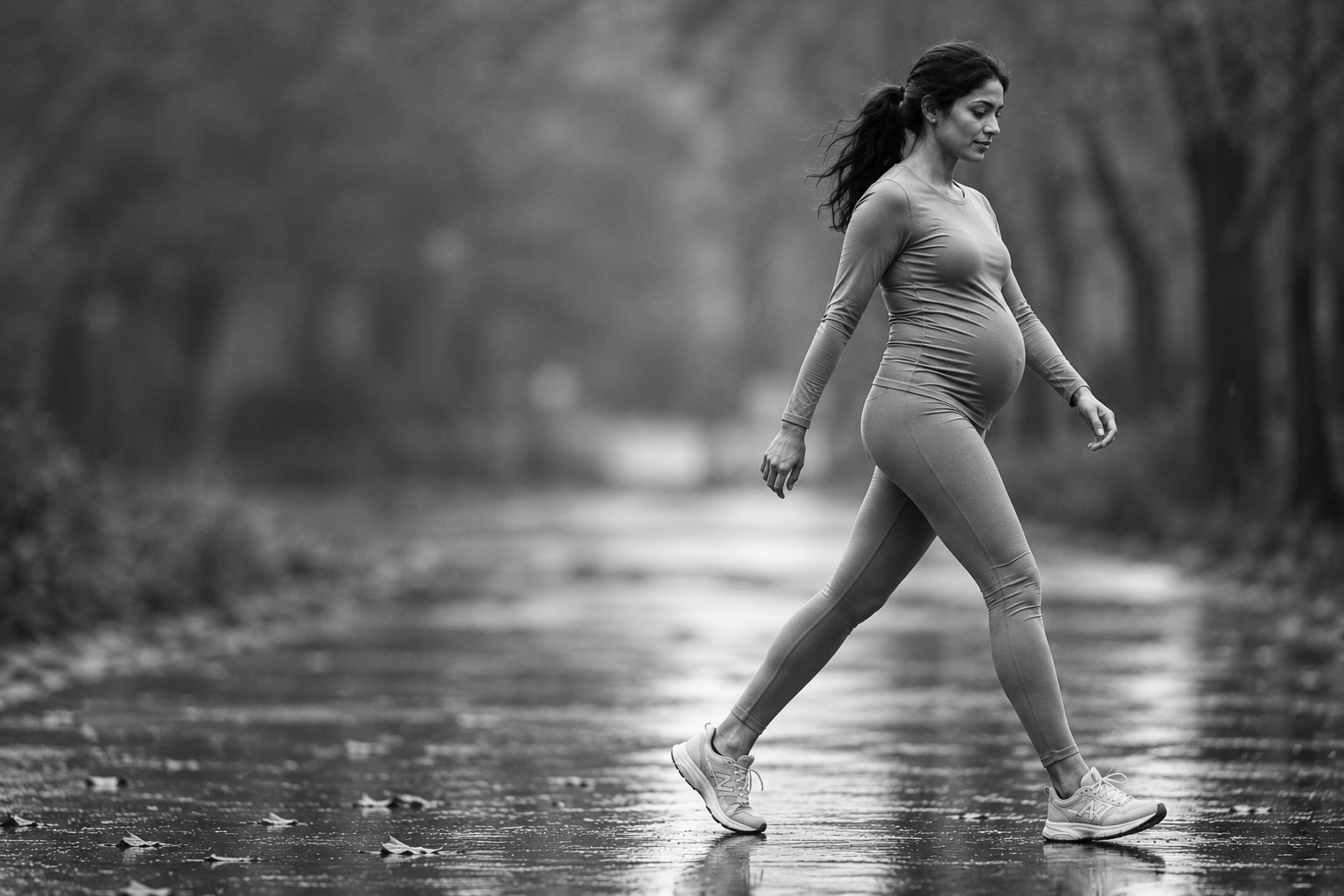
It's common to notice that maternity leggings often list a higher elastane percentage than a maternity blouse or a pair of jeans, and this isn't arbitrary. A legging is expected to move closely with the body through a full range of motion and to recover its shape immediately after, which generally calls for a higher proportion of stretch fibre. A woven blouse, by contrast, is usually designed to skim the body rather than cling to it, so a smaller percentage — sometimes combined with a looser cut or gathered panel — can achieve the fit the garment is going for without needing the same level of elastane.
Jeans sit somewhere in between. Denim traditionally has little to no stretch on its own, so even a modest elastane addition changes its behaviour considerably compared with the woven cotton it started as. This is one reason maternity jeans often rely on a dedicated stretch bump panel in addition to the elastane blended through the main fabric, rather than expecting the base denim to do all the work. Reading a product description with this in mind — what the garment is actually being asked to do — is generally more useful than comparing elastane percentages across completely different garment types as if they were on the same scale.
Common misconceptions worth clearing up
"More elastane is always better." A higher elastane percentage isn't automatically an improvement. More elastane changes more than stretch: a peer-reviewed study of elastane-containing knitted fabrics found relationships between elastane amount, yarn count, and properties including air permeability, bursting strength, spirality, and drape (Eryuruk & Kalaoglu, 2016). That's another reason percentage alone shouldn't be treated as a simple quality score — very high proportions can change how a fabric feels, sometimes making it feel more like activewear than everyday clothing. The right amount depends on the garment's purpose rather than being a number to maximise.
"Elastane percentage alone tells you how well a garment will hold up." As above, construction, knit density, and care all play a meaningful role. A well-constructed fabric with a modest elastane percentage can outperform a poorly finished fabric with a higher one; the label alone doesn't settle the question.
"All stretch fabrics behave the same." Mechanical stretch from a knit structure and stretch from elastane content are not identical, even when a garment feels similarly flexible on a hanger. The distinction can matter for how much recovery to expect after repeated wear.
What the label can't tell you
Two garments can both say "95% cotton, 5% elastane" and still feel and perform very differently. The composition label tells you what fibres are present and in what proportions; it doesn't tell you the fabric weight, knit density, yarn construction, direction of stretch, recovery after repeated wear, or how the finished garment has been constructed.
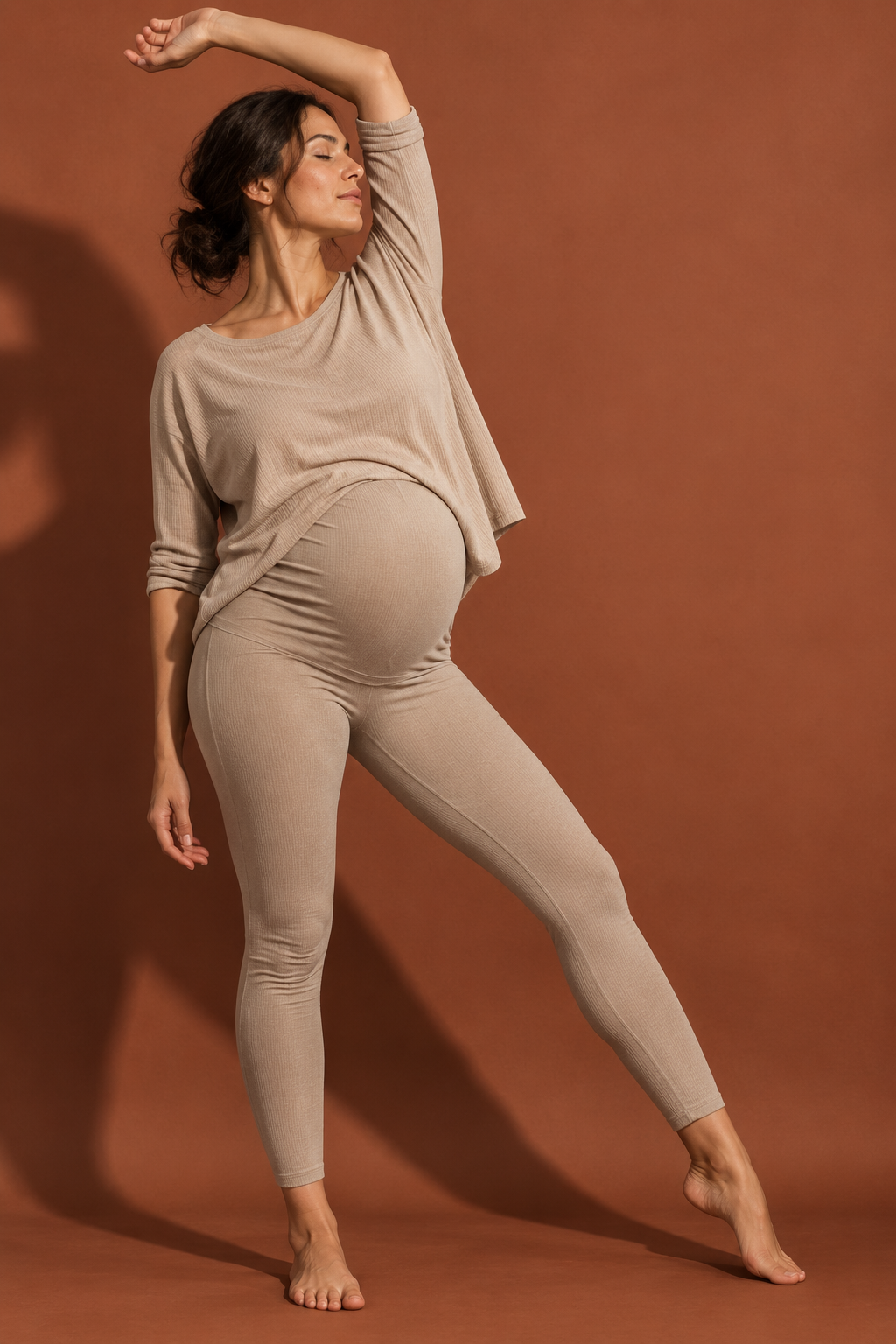
That means fibre composition is best used as a comparison clue, not a performance score. If two products have similar compositions but different constructions — for example, a dense legging and a lightweight ribbed top — you shouldn't expect the same stretch, support, or recovery simply because the percentages match.
What to check before buying
- Fibre composition and percentage — usually listed in the product description, this gives a starting point rather than a full picture
- Base fibre suited to the garment's purpose — cotton or viscose for everyday comfort and breathability, synthetic blends for activewear-style pieces where shape retention and quick drying matter more
- Care instructions — since recovery depends partly on how a garment is washed and dried, not only on what it's made from
- Knit versus weave — knitted fabrics generally offer more inherent stretch than woven ones, independent of elastane content, which affects how a garment moves
- Intended length of wear — a piece meant to be worn heavily across pregnancy and into the postpartum period may be worth evaluating more carefully on recovery than an occasion piece worn only a handful of times
A note on durability claims
It's tempting to assume that a higher price or a specific fibre blend automatically means a garment will last longer, but durability depends on multiple factors working together — fibre choice, construction quality, finishing, and how the garment is cared for. A defensible approach is to treat elastane content as one useful input among several, rather than the deciding factor, and to read the fuller product description alongside it where one is available.
Comparing fabric options on MAMANIDA
Fibre composition is listed on most product pages, which makes it possible to compare maternity jeans, leggings, dresses, and tops by fabric blend alongside price, size, and colour on MAMANIDA. Knowing what to look for in that composition — rather than assuming a higher elastane number is automatically the better choice — is what this guide is meant to help with.
Sources referenced
Textile-engineering evidence: Eryuruk, S.H. & Kalaoglu, F. (2016), "Analysis of the performance properties of knitted fabrics containing elastane," International Journal of Clothing Science and Technology, 28(4), 463–479 (doi.org/10.1108/IJCST-10-2015-0120) · Eren, O., Oğlakcıoğlu, N. & Çay, A. (2024), "The Effects of Polyester Filament Number and Accompanying Hydrophilic Fiber Type on Moisture Management and Drying of Double-Layered Knitted Fabrics," AATCC Journal of Research, 11(6), 445–455 (doi.org/10.1177/24723444241275990)
The interpretation of what these findings mean for choosing maternity clothing is MAMANIDA's own; the studies themselves are laboratory research on knitted fabric samples, not maternity-specific testing.
How to Choose Maternity Jeans for Every Trimester
Related guides
How to Choose Maternity Jeans for Every Trimester
What matters most in maternity jeans can change as pregnancy progresses.
What to Look for in a Nursing Dress
A nursing dress needs to do two jobs at once: look and fit like a dress you'd actually choose, and give you practical, fast access for feeding.
How to Build a Maternity Capsule Wardrobe
A maternity capsule wardrobe is a small set of pieces, chosen to work together, that covers most of what pregnancy actually requires without buying a full new wardrobe for a body that keeps changing.
MAMANIDA may earn a commission when you visit or purchase from a retailer through certain links. This does not affect the price you pay or how we evaluate products. Full disclosure available separately. This article draws on the peer-reviewed textile research cited above and general publicly available product specifications. It does not represent claims of physical product testing by MAMANIDA, and fabric performance can vary by manufacturer and construction even within the same fibre blend.