Choosing & buying
Can Maternity Clothes Have a Second Life? What We Found Across 24 Brands
A survey says maternity wardrobes get passed on. We checked 24 catalog brands to find out what the evidence actually supports.
Mamanida Editorial· Published 2026-09-03
In this guide
What happens to maternity clothes after pregnancy?
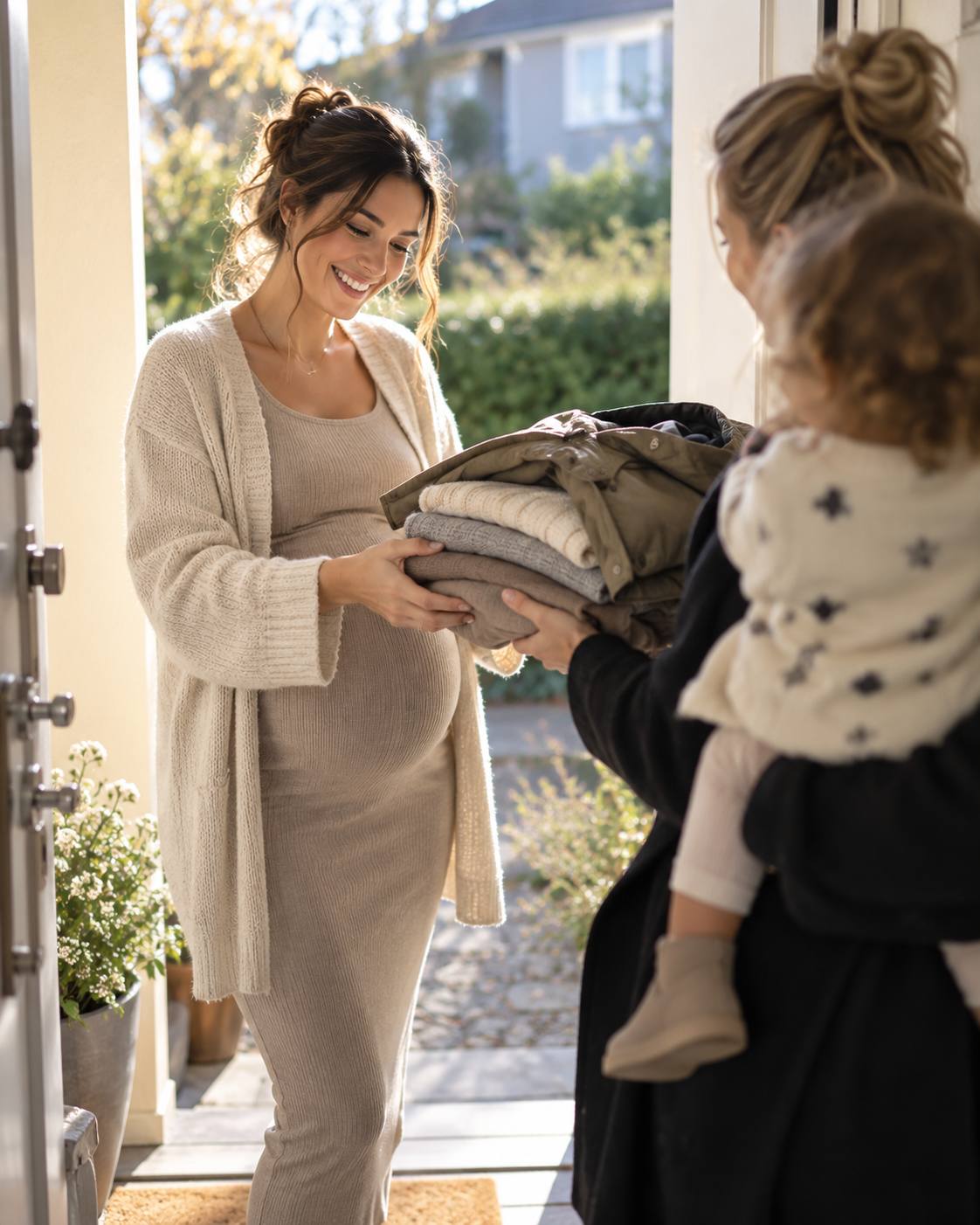
A survey commissioned by maternity brand Isabella Oliver, covering 500 mothers and independently reported by Yahoo Life UK, found that expectant mothers spend an average of £700 on around 21 items of maternity clothing, typically worn from roughly 16 weeks into pregnancy until about five weeks postpartum. What happens next is the more interesting number: over a quarter of respondents pass their maternity clothes on to friends or family, three in ten donate them, and one in ten throw them away. In other words, a meaningful "second life" economy for maternity clothes already exists informally, whether or not any given shopper is thinking about it at the point of purchase.
The survey was conducted in the UK, so the £700 spending figure should be read in that context rather than treated as a US spending benchmark. The underlying question, however, applies just as well to a US shopper: if a garment might get a second owner, a second pregnancy, or a life after pregnancy altogether, what evidence can you actually use to judge whether that's realistic — beyond hoping for the best?
"Second life" can mean several different things
Before comparing brands, it's worth being precise about what we're actually looking for, because we found at least four distinct kinds of evidence hiding under the single word "sustainable":
Certification and manufacturing evidence — third-party certification of materials or factories that can be confirmed against a registry.
Independent assessment — an outside organization evaluating or reporting on a brand's practices, separate from what the brand says about itself.
Lifecycle and multi-stage design — a garment explicitly designed to work during pregnancy, postpartum, and sometimes beyond, which affects how long it stays useful without saying anything about how it was manufactured.
Circularity evidence — an actual, observable resale, rental, or take-back pathway currently in operation.
None of these proves the others. A brand can have excellent multi-stage design and no sustainability credentials at all. A brand can hold a real certification and have no resale pathway. Confusing these categories is, as far as we can tell, the single most common way maternity sustainability claims end up overstated — not necessarily through dishonesty, but through readers (and, during our own research process, us) collapsing four different questions into one.
How we checked
MAMANIDA reviewed all 24 brands in its catalog in September 2026. For each brand, we checked current brand materials for sustainability disclosures, certifications, manufacturing practices, and pregnancy-to-postpartum design claims, then separately searched for independent certification registries, third-party assessments, and observable resale or rental activity. Brand claims and independently sourced evidence are reported separately throughout. "No qualifying evidence found" means we did not identify evidence meeting these criteria during this research pass — it is not a judgment on any brand's actual practices or product quality.
One note on this process: several claims we initially recorded needed correction once we checked the underlying source directly — a resale platform that turned out to reference a different, similarly named brand; a recycled-content figure we couldn't reproduce on the actual product page; an independent rating that was more mixed than a first pass suggested. We're mentioning this not to single any brand out, but because it shaped how cautiously we've labeled everything below. Specificity turned out to be easy to overstate, in our own drafting as much as anywhere else.
What the 24-brand audit found
| Brand | Independent evidence | Brand-documented evidence | Circularity / lifecycle evidence | What this establishes |
|---|---|---|---|---|
| Isabella Oliver | House of Baukjen, Isabella Oliver's parent company, is a certified B Corp (B Lab directory, score 153.6); reported by FashionUnited | ECOVERO viscose, TENCEL lyocell | Pre-Loved resale program + rental membership | The clearest case in the catalog of certification and circularity both independently observable |
| Boob Design | GOTS license 177019 (Ecocert Greenlife); Good On You rates "Great"/"Good" and references bluesign, BSCI, SMETA, and SA8000 standards used somewhere across the supply chain | Brand states products are currently offered under this GOTS certification; Boob Design was acquired by Monthly Of Sweden AB following a 2024 bankruptcy, a corporate change independently confirmed via the brand's own bankruptcy notice and independent business press | None found | Independently corroborated certification, held under a corporate structure that changed in 2024; no resale/rental signal found |
| Nine The Label | None | Stated repair/resale goals | Live on John Lewis Fashion Rental (independently confirmed) | A genuine, live circularity pathway without certification evidence |
| Club L London | None | Depop + HURR pages, consistent across 5 regional sites | Depop account, corroborated by a current job listing hiring for it | Real, current resale/rental activity; an older independent assessment described the brand as lacking circularity programs, apparently predating the initiatives confirmed during this research pass |
| MAMA;LICIOUS | Good On You: "It's a start" (mixed — "not good enough" on labor) | 2-in-1/3-in-1 construction; recycled and Lenzing fibers | None found | Genuine multi-stage design alongside a mixed, not strongly positive, independent rating |
| DL1961 | Good On You mixed; LeafScore flags vague "certified cotton" language | Water/energy figures (executive-sourced, reported not audited); Recover™ partnership | None found | Extensive brand claims; independent sources are unflattering or mixed, not confirmatory |
| Tiffany Rose | None (a claimed resale-platform link referred to a different, similarly named brand) | UK manufacturing | eBay, Vinted, and Motherhood Closet listings confirmed | Observable secondhand market; no independent sustainability confirmation |
| Ilouity | None (certifications named on-site, not registry-checked) | Turkey (denim) / Portugal (jersey) manufacturing; organic cotton, recycled polyester | None found | Detailed, specific brand disclosure; independent status unconfirmed |
| AIM'N | None | States OEKO-TEX Standard 100 compliance; BSCI/SGS audits | None found | Brand-stated compliance only; a specific recycled-content figure could not be reproduced |
| Cache Cœur | None | General longevity statement (since 2008) | None found | Thin, brand-stated intention only |
| BAE The Label | None found | Waistband/multi-stage marketing claims | None found | Construction marketing claim only |
| Soon Maternity | None — aggregator profile explicitly self-labels "unverified... unclaimed" | Same source | None found | Apparent third-party evidence turned out to be self-described unverified aggregation |
| Légoe Heritage | None | Pregnancy/nursing/afterwear design; plastic-free packaging | Donation partnership with Thread Together (reuse, not resale) | Genuine lifecycle design plus a real donation pathway |
| Attesa | None | Made in Italy; made-to-order; pregnancy/nursing/beyond design | None found | Concrete manufacturing claims; independent status unconfirmed |
| Mamarella | None | Large sustainability-labeled range; organic cotton, TENCEL, recycled materials (incl. a specific recycled-content coat example) | None found | Extensive, specific brand disclosure — specificity aids checkability, not independence |
| Jorgen House | None | Renewable-energy factory; regenerated yarns; FSC-certified packaging | None found | Detailed brand-documented manufacturing practice |
| Embrace | None (a claimed independent factory audit could not be reproduced) | Natural fibers; general longevity positioning | None found | General brand claim only; the audit claim is unconfirmed |
| Bumpsuit | None | Multi-stage design confirmed on product pages | None found | Genuine lifecycle design; a specific recycled-swimwear claim remains unconfirmed |
| GLAMIX | None | Generic "sustainable" language, no specifics | None found | Marketing language without checkable substance |
| NOM Maternity | None | Multi-stage fit design; no sustainability claims at all | None found | Lifecycle-fit evidence only — there is no sustainability claim to evaluate, positive or negative |
| PinkBlush | None | Multi-stage/lifecycle-fit design ("during pregnancy and after") | None found | Same pattern as NOM — genuine lifecycle design, entirely separate from sustainability |
| Bump & Milk | None | Brief self-description ("sustainably and ethically made in Europe") on its own channel | None found | Thin, unelaborated brand claim |
| Apparalel | None | None confirmed this pass | None found | No qualifying evidence found |
| Momanda | None | None — own brand page confirmed to contain no sustainability content | None found | No qualifying evidence found |
The strongest independent evidence
House of Baukjen, the parent company of Isabella Oliver, and Boob Design stand out for a specific reason: their sustainability claims are corroborated by sources other than the brand itself. House of Baukjen's B Corp status is listed directly in B Lab's own registry, and independent trade press has reported on its standing. Boob Design's GOTS certification carries a checkable license number (177019, via Ecocert Greenlife), and Good On You — an independent ratings directory — separately assesses the brand well on both environmental and labor measures, referencing standards including bluesign, BSCI, SMETA, and SA8000 used across its supply chain. Worth noting: Boob Design was acquired by Monthly Of Sweden AB following a 2024 bankruptcy — a real corporate change we confirmed independently, though we could not confirm the specific details of how the GOTS certification itself was administratively carried through that transition. None of this is the same as saying these are "the best" brands in the catalog; it means these were the clearest examples we found of sustainability evidence that exists outside the company's own marketing.
Circularity is a different kind of evidence than certification
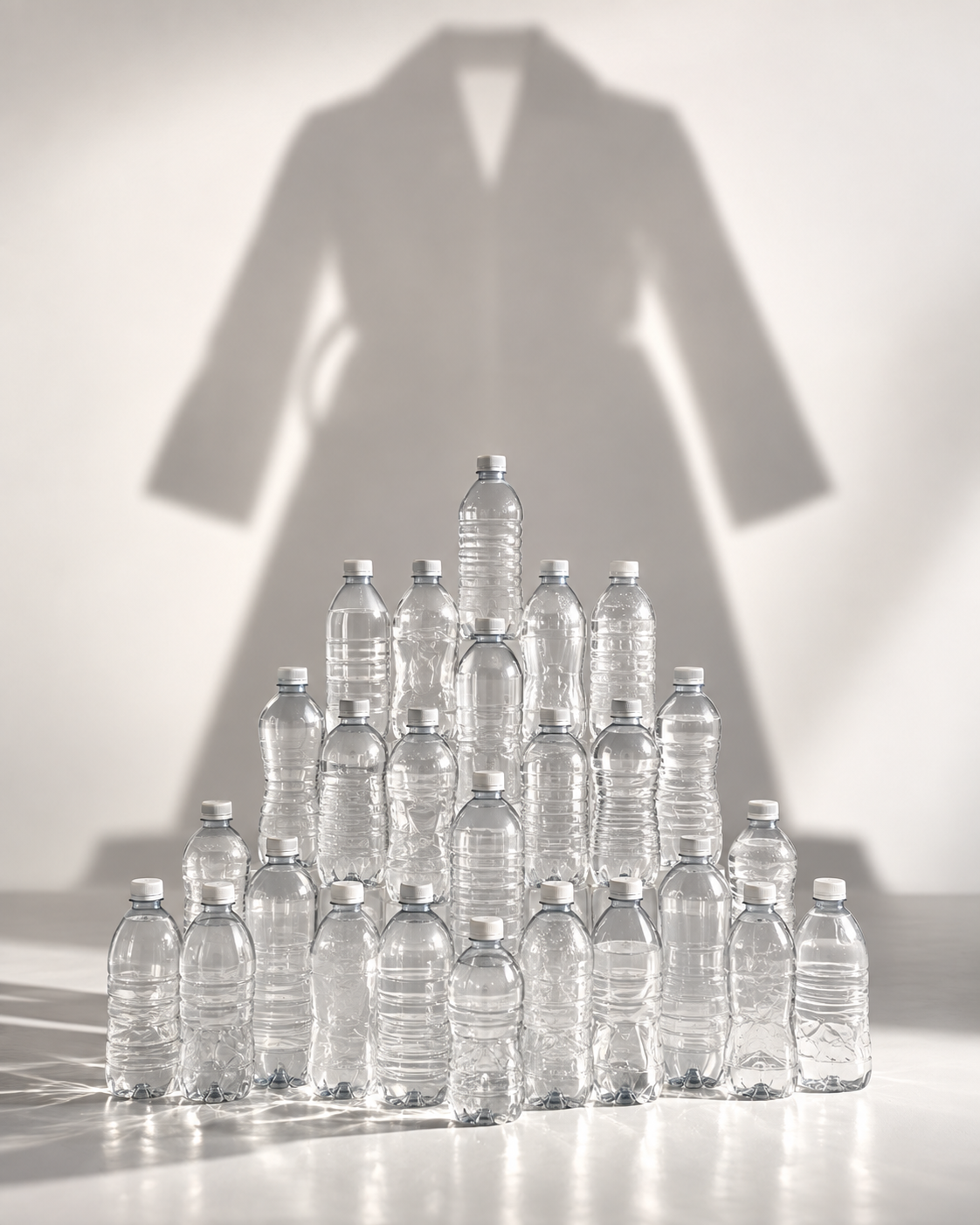
Nine The Label and Club L London illustrate a separate, equally useful signal: a live, observable pathway back into use. Nine The Label's pieces are currently available to rent through John Lewis's own rental platform — an independent business, not just a brand claim. Club L London operates an active Depop resale account and a rental partnership, corroborated by a current internal job posting for a circular-fashion role. Neither of these tells you anything about how the garments were manufactured or what they're made from — but they tell you something a certification can't: that a real, functioning path exists for the garment to be used again by someone else, right now.
Multi-stage design is a third kind of longevity — and it's not the same as durability
Several brands — PinkBlush, NOM Maternity, Bumpsuit, Légoe Heritage, MAMA;LICIOUS — explicitly design pieces to work during pregnancy, postpartum, and in some cases beyond. That's genuinely useful information: it tells you a garment's intended useful life is longer than nine months. It does not tell you the garment is sustainably manufactured, and it does not tell you it will physically hold up to repeated wear or multiple owners. A piece can be brilliantly designed to transition from bump to postpartum and still wear poorly over time, while a less adaptable garment may prove physically durable. Treating "designed for after pregnancy" as equivalent to "built to last" is a substitution worth resisting.
What we couldn't establish
For Apparalel and Momanda, we found no qualifying sustainability, lifecycle, or circularity evidence during this research pass, and we want to be direct about what that does and doesn't mean. It means we didn't find published, checkable material meeting our criteria at the time we looked. It doesn't mean these brands lack sustainable practices; it means that information, if it exists, isn't currently documented anywhere we could locate and verify. Other brands in the catalog had evidence that was too limited, indirect, or unverified to support stronger conclusions than "brand states" — that's a different, more common outcome than finding nothing at all. Soon Maternity is a specific case worth flagging separately: a third-party site presents information about the brand, but that site itself explicitly labels the profile "unverified" and "unclaimed," compiled from public sources rather than confirmed with the brand — which makes it evidence of what an aggregator found, not independent verification of anything.
Buying pre-loved maternity clothes online
Buying pre-loved online is slightly different from buying in person because, when shopping remotely, you usually can't try the garment on, test the closures, or inspect wear yourself before paying. That makes the listing — and the questions you ask the seller — particularly important.
Start with the exact brand, size, and product name where possible. Maternity sizing can vary between brands, and photos alone may not show whether a garment uses an over-the-bump panel, under-the-bump waistband, nursing opening, removable insert, or another pregnancy-specific construction detail.
Before buying, check:
- Actual garment photos, not only catalog images. Look for photos of the item being sold, including the front, back, interior, and any maternity or nursing components.
- Measurements as well as the size label. Ask for garment measurements if they're missing, particularly when buying an unfamiliar brand or a style designed to change throughout pregnancy.
- Fabric composition and care label. A photo of the label can help confirm the fiber composition, washing instructions, and sometimes the exact style.
- Condition in high-wear areas. Ask about pilling, stretched waistbands or panels, stains, seam damage, and problems with zippers, buttons, or snaps rather than relying only on a general description such as "good condition."
- All original components. Maternity coats, nursing garments, and convertible pieces may originally have included removable bump panels, babywearing inserts, belts, straps, or other attachments. Confirm what's included in the sale.
- Alterations. Ask whether the garment has been shortened, taken in, repaired, or otherwise altered, since the size on the label may no longer describe the actual fit.
- Returns and buyer protection. Check the marketplace's current return, dispute, and buyer-protection rules before paying, particularly where fit or an inaccurate item description could become an issue.
- Compare the price with buying new. Check the current new price where the same or a comparable style is still available. A pre-loved garment isn't automatically a better value if the savings are small but the item has visible wear, missing components, uncertain fit, or weaker return protection.
When a seller can't answer every question, that doesn't necessarily mean the garment is a poor purchase — it means there's more uncertainty to factor into the price you're willing to pay, and whether the savings over buying new are large enough to justify it.
Where to look: General resale marketplaces can offer the widest selection, while maternity-specific consignment services may make it easier to search by maternity brand or garment type. Brand-operated pre-loved programs and rental platforms are another option where available. During our September 2026 research, for example, we confirmed Isabella Oliver's own Pre-Loved program, Tiffany Rose garments on independent resale marketplaces, and Nine The Label pieces on John Lewis Fashion Rental. Availability changes continuously, so treat individual listings as snapshots rather than permanent inventory.
How to assess a pre-loved maternity garment
Regardless of what a brand's marketing says, a few checks apply across virtually any maternity garment you're hoping will have a life beyond one pregnancy:
- Closures — test zippers, buttons, and snaps to make sure they operate correctly and aren't damaged
- Seams and lining — inspect these separately from the outer fabric for tears, separation, or other wear
- Removable inserts or panels — if the garment relies on an insert to work across multiple stages, confirm that it's included and in usable condition
- Care history and instructions — check the care label and, where possible, ask how the garment has been washed or cleaned; laundering and care can affect garment condition and lifespan
- Missing components — for coats and babywearing jackets in particular, check that any maternity or babywearing insert supplied with the original garment is still present
What this means when comparing maternity clothes on MAMANIDA
MAMANIDA lets you compare the characteristics that affect how useful a garment may be during pregnancy and beyond — including fabric composition, fit, and construction details — alongside price, size, and brand information. Where sustainability or circularity evidence is documented for a specific brand, we'd encourage weighing it separately from fit and design, rather than assuming one implies the other.
Sources referenced
Yahoo Life UK, reporting on a survey commissioned by Isabella Oliver of 500 mothers (aol.com/news/mums-spending-700-maternity-clothes-pregnancy-110610451) · B Lab, B Corp directory listing for House of Baukjen (Izzie & Ollie Ltd) (bcorporation.net) · FashionUnited, on House of Baukjen's B Corp standing (fashionunited.uk) · Isabella Oliver, "Sustainability" (isabellaoliver.com/pages/sustainability) · Boob Design, sustainability and bankruptcy disclosure (boobdesign.com/support/questions-and-answers-on-the-bankruptcy; boobdesign.com/about-boob) · Mainsights, "Monthly of Sweden acquires Boob Design and Imse Vimse" (mainsights.io) · Good On You, brand assessments for Boob Design, MAMA;LICIOUS, and DL1961 (goodonyou.eco) · LeafScore, on DL1961 material certification claims (leafscore.com) · Nine The Label, John Lewis Fashion Rental listing (johnlewisfashionrental.com/designers/nine-the-label) · Club L London, sustainability page and current careers listing (clubllondon.com) · Ilouity, sustainability disclosure (ilouity.com/pages/sustainability) · AIM'N, sustainability disclosure (aimn.com/pages/sustainability) · Légoe Heritage, "About Us" (legoeheritage.com/pages/about-us) · Attesa Maternity, sustainability page (attesa.it) · Mamarella, sustainable maternity collection (mamarella.com) · Jorgen House, sustainability page (jorgenhouse.com/pages/sustainability) · Embrace, brand site (wearembrace.com) · Bumpsuit, product pages (bumpsuit.com) · NOM Maternity, "About Us" (nommaternity.com/pages/about-us) · PinkBlush, "About Us" (pinkblushmaternity.com/pages/about-us) · Sustainability Tracker, Soon Maternity profile, self-labeled unverified (sustainabilitytracker.com/brand/soon-maternity)
Related guides
How Many Maternity Clothes Should You Really Buy? What Other Moms Say
Published accounts from other moms show just how widely maternity wardrobes can vary — and why your own routine matters more than somebody else’s number.
Understanding Elastane in Maternity Clothing
The percentage on the label tells you less than you might think. The same elastane percentage can perform completely differently depending on the fibers, fabric structure, and construction around it.
MAMANIDA may earn a commission when you visit or purchase from a retailer through certain links. This does not affect the price you pay or how we evaluate products. Full disclosure available separately. This guide draws on a brand-commissioned survey (independently reported), brand sustainability disclosures, independent certification registries, and independent ratings organizations, as cited above. It does not represent claims of physical product testing by MAMANIDA. "No qualifying evidence found" reflects the limits of this research pass, not a judgment on any brand's actual practices.